
Chato - Video Chat & Have Fun
Chato TeamSocial
2.865.00 Reviews
- Version
- 2.1.5
- Installs
- 10.00M
- Age Rating
- Mature 17+
Screenshots







Our Review of Chato - Video Chat & Have Fun
 Analysis by Appyee
I tried Chato as a social video-chat app, and my first impression was that it aims for immediate, low-commitment conversations rather than the structured experience you get from a messaging network. Its purpose is easy to understand: open the app, look for other people, and use video as the main way to interact. That simplicity can be appealing when I want a more direct social experience instead of another feed to scroll through.
At the same time, this is an app that needs realistic expectations. Its average rating is 2.8 from around 14 thousand ratings, while its install count has passed 10 million. Those figures suggest that plenty of people have tried it, but popularity should not be confused with consistently positive experiences. I would approach it as an experiment for casual video conversations, not as a dependable replacement for every social app already on my phone.
How Chato works as a social video-chat app
Chato is published by Chato Team and sits in the social category. The current version is 2.1.5, and it runs on Android 7.0 or later. That relatively broad system requirement makes it accessible to people using older Android devices, although the quality of any video-chat session will still depend on the phone, camera, microphone, and connection being used.
The mature 17+ rating is important before installing it. I would not treat Chato as a family-oriented communication tool or hand it to a younger teenager simply because the download itself is free. A video-chat environment can be unpredictable, and the age classification is a clear reason for adults to think about whether the app suits their household and the person using it.
The central appeal is the immediacy of face-to-face contact. Text-based social apps give me time to edit a message, ignore a conversation, or move through a profile quietly. Video changes that rhythm. It can make an interaction feel more personal, but it also makes awkward moments, unwanted contact, and poor connections more noticeable. That trade-off is at the heart of the Chato experience.
In practical terms, I would use it when I am open to meeting people in the moment and do not need a carefully organized contact list. It is less suitable when I want a private conversation with people I already know, a professional call, or a predictable way to reach one specific person. For those needs, established messaging and video-meeting tools are usually easier to control.
What the free download really means
Chato is free to download, so I can test the basic experience without paying an entry fee. That distinction matters: free access lets me decide whether the style of social interaction works for me before spending anything. I would not make a purchase immediately. I would first check how comfortable I feel with the conversations, how often I encounter useful interactions, and whether the app fits my normal routine.
The app also includes in-app purchases ranging from $0.99 to $99.99 per item. Those prices create a wide gap between a small optional purchase and a much larger commitment. Since the free installation is enough to evaluate the service, I see paid items as something to consider only after understanding exactly what they provide in the version I am using. I would avoid treating them as necessary simply because a conversation feels slow or because I want faster results.
This is where Chato’s value becomes personal rather than automatic. Someone who enjoys spontaneous video interaction may find the free access worthwhile even without buying anything. Another person may open it once, dislike the atmosphere, and see no reason to spend. The existence of purchases does not by itself prove that paid use is better, so I would keep the first session strictly exploratory and set a spending limit before trying any optional item.
For families sharing a device or payment method, the purchase range deserves extra attention. A free app can still lead to paid charges if someone taps through optional items without understanding the cost. I would check the device’s purchase controls and make sure the account owner knows that Chato has items at several price points. That is a simple precaution, but it is especially sensible for a mature-rated social app.
Where the experience can be useful
The strongest use case is casual social discovery. Imagine finishing work on a quiet evening, wanting a little human interaction but not wanting to compose a long profile or join a scheduled group call. Chato can make sense in that moment because its video-first format gets closer to a live conversation than a conventional social feed does.
I can also see value for someone who finds text chat tiring or impersonal. Seeing a person’s expressions and hearing their voice may help a conversation feel more natural. That does not guarantee a good match, but it changes the kind of connection the app offers. The benefit is not productivity; it is the possibility of a more immediate social moment.
A less obvious advantage is that video can reveal compatibility quickly. With text, I may spend a long time exchanging messages before discovering that the tone, pace, or interests do not suit me. A short live interaction can make that clear sooner. The downside is that this efficiency works both ways: I also have less time to prepare, and the other person may make assumptions based on a brief encounter.
My practical tip would be to treat the first interaction as a screening step, not a commitment. I would avoid sharing personal contact details, workplace information, home details, or other identifying material just because the conversation feels friendly. If someone pressures me to move elsewhere, spend money, or reveal information, I would end the interaction rather than trying to rescue it.
Another useful approach is to use Chato when I have enough time to leave if the experience becomes uncomfortable. I would not open a live social app during a rushed break, while driving, or when I need to be fully available for an important task. Video conversations demand attention, and the spontaneous format can make it harder to control the pace than in an ordinary messaging app.
Trade-offs compared with familiar alternatives
Compared with a standard messaging platform, Chato puts more emphasis on immediacy and less on carefully building a known network. Messaging apps are usually better when I need reliable contact with friends, searchable conversations, shared files, or a clear record of what was said. Chato is more interesting when the point is meeting someone outside my existing circle, but that also makes the outcome less predictable.
Compared with a mainstream video-meeting service, Chato is aimed at social discovery rather than planned calls. Meeting tools are stronger for work, classes, family appointments, and invitations sent to people I already trust. They normally fit a scheduled purpose. Chato’s appeal is the opposite: a lighter, more spontaneous route into conversation.
Compared with a text-based social network, Chato may feel more personal but also more demanding. A feed lets me browse quietly and choose when to respond. Video asks me to participate in real time. If I prefer anonymity, written conversation, or the ability to think before replying, a text-first alternative will probably be a better match.
The rating of 2.8 is a meaningful caution sign in this comparison. It does not tell me exactly why each person was dissatisfied, and it should not be treated as a complete technical diagnosis. Still, I would take it seriously alongside the mature rating and the live nature of the app. The large install base shows broad interest, but it does not remove the need to judge the experience for myself.
One trade-off that is easy to overlook is the difference between discovering people and finding dependable relationships. Chato may help start an interaction, but a single video conversation is not the same as trust. If I am looking for a long-term community, close friendships, or a moderated interest group, I would choose a service built around those goals instead of expecting a spontaneous video app to provide them automatically.
Small habits that make testing Chato wiser
I would begin with a short trial rather than opening the app with a large social goal. The point of the first session would be to observe the quality of conversations, how comfortable the interaction feels, and whether I can leave easily when I want to. This gives me a better basis for judging value than the download count or a quick glance at the store page.
I would also keep the camera decision deliberate. Video can be the reason to use Chato, but I do not need to show more of my surroundings than necessary. A neutral setting helps protect personal details in the background. I would check what is visible before starting a conversation, especially if I am using the app in a bedroom, workplace, or shared home.
A third useful habit is separating curiosity from spending. If I encounter a purchase option, I would ask what problem it solves for me and whether the free experience is already useful. The low end of the purchase range may feel minor, while the highest listed item is a much more substantial commitment. I would never buy simply to avoid boredom, pressure, or disappointment during a conversation.
I would keep expectations flexible about connection quality as well. Video depends on more than the app itself, so a weak result may come from the phone or network rather than the social idea. Still, if poor sessions happen repeatedly or the app feels unreliable on my device, I would not keep paying in the hope that the experience will suddenly become worthwhile.
Finally, I would remember that the mature rating is not a promise that every interaction will be comfortable or suitable for every adult. It is a signal to use judgment. I would leave conversations that become offensive, manipulative, or intrusive, and I would not assume that a friendly opening tells me much about the person behind the screen.
Who should try it, and who should skip it?
Chato is worth trying for adults who specifically want spontaneous video socializing and are comfortable with uncertainty. It may suit someone who enjoys meeting unfamiliar people, prefers live conversation to long text exchanges, and can evaluate interactions without feeling pressured to continue. The free download makes that initial test relatively straightforward.
I would recommend skipping it if the goal is private communication with family, dependable contact with friends, or professional meetings. Those situations benefit from known contacts, invitations, scheduling, and stronger control over who joins. Chato’s format is not a weakness in itself, but it is the wrong tool when predictability matters more than discovery.
I would also avoid it for anyone under the mature age rating, for people who are especially uncomfortable with unexpected video contact, and for users who tend to make impulse purchases when an app feels slow. The combination of live interaction and optional spending calls for a calm, self-directed approach.
On the other hand, adults who have grown tired of endless scrolling may appreciate the change in pace. Chato gives the possibility of an actual exchange rather than another stream of posts. Whether that becomes meaningful depends heavily on the people encountered, so I would judge it by the quality of my own sessions rather than by the promise of instant connection.
My final decision on its value
My view is that Chato is best treated as a free trial for a particular kind of social experience, not as an essential communication app. It offers a direct route into video conversation, and that can be refreshing when I want something more immediate than text. Its broad Android compatibility and large audience make it easy enough for many people to test.
However, the 2.8 average rating, mature 17+ classification, unpredictable nature of live social contact, and optional purchases all make caution sensible. I would use the free access first, protect personal information, and decide on any purchase only after identifying a clear benefit. The paid range from $0.99 to $99.99 per item means that “free to download” should not be mistaken for “every part of the experience costs nothing.”
My recommendation is to try Chato only if spontaneous video discovery is genuinely what you want. I would skip the purchases at the beginning and compare the experience with a trusted messaging app or a scheduled video service based on the purpose of the call. For casual adult users who enjoy that uncertainty, it may provide an interesting change from ordinary social feeds. For everyone else, especially anyone seeking control, privacy, or reliable contact, another category of app will likely deliver better value.
Verdict
Strengths of Chato - Video Chat & Have Fun
- Quickly connects you with people through live video chat.
- Simple interface makes starting conversations easy for new users.
- Interactive features help keep chats lively and engaging.
- Useful for meeting people beyond your existing social circle.
- Video-based conversations feel more personal than text messaging.
Limitations of Chato - Video Chat & Have Fun
- Interactions with strangers may sometimes feel awkward or uncomfortable.
- A stable internet connection is needed for smooth video calls.
- Some features or interactions may require in-app purchases.
- Privacy risks exist when sharing personal details with new contacts.
- The quality of conversations can vary widely between users.
Similar Picks in This Category
View All
Meta Platforms, Inc.4.6

Instagram4.0

Likee-Live, Chat & Party Games
Likeme Pte. Ltd.4.4

Facebook Lite
Meta Platforms, Inc.4.5

TikTok - Videos, Shop & LIVE
TikTok Pte. Ltd.4.0

Moj: Free Short Drama & Reels
ShareChat4.1
Frequently Asked Questions
What is Chato - Video Chat & Have Fun?
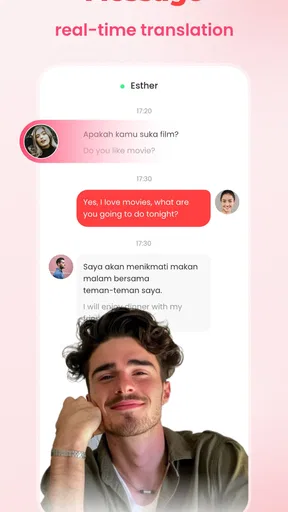
Chato is a social video-chat application designed for meeting and talking with new people through live video interactions. Depending on the features available in your region, you may be able to browse profiles, start one-to-one video conversations, send messages, and use interactive effects. It is intended for casual socializing and entertainment rather than professional meetings or private messaging only.
Is Chato - Video Chat & Have Fun free to download and use?
The app may be free to download, but some features can require in-app purchases, credits, subscriptions, or other paid options. Video chats and additional social functions may have usage limits depending on the account and current app policies. Before spending money, review the pricing shown inside the application, including renewal terms, credit costs, and cancellation instructions available through Google Play or the App Store.
Is Chato safe for teenagers and children?
Users should check the current age rating and terms of service before installing Chato. Video-chat platforms can connect you with strangers, so conversations may include unexpected language, behavior, or requests. Children should not use the app without appropriate parental supervision, and users should avoid sharing their full name, address, school, phone number, passwords, financial details, or private photographs with people they meet online.
What permissions does Chato require?
Because Chato focuses on video communication, it may request access to the camera and microphone, and it may also use notifications, photos, or storage depending on the features you choose. You can review and change these permissions in your Android or iOS settings. Only grant access that is necessary for the functions you want to use, and disable permissions if you stop using video or voice features.
What should I do if I encounter inappropriate behavior or a suspicious user?
If another user behaves inappropriately, pressures you to share personal information, requests money, or sends offensive content, end the conversation and use Chato’s available block and report tools. Do not continue negotiations or move to another platform if you feel uncomfortable. Keep evidence when appropriate, avoid opening unknown links, and contact the platform’s support team or local authorities if there is a serious threat.
